
Why recycled materials are increasingly being chosen
September 18, 2026
Why recycled materials are increasingly being chosen
Waste often consists of valuable raw materials
A plastic bottle.
An aluminum can.
An old laptop.
Or a worn-out T-shirt.
Many people see waste. Manufacturers are increasingly seeing a new raw material.
By reprocessing materials, existing raw materials are given a second life. This explains why recycled materials are increasingly used in promotional gifts, office supplies and consumer products.
Not because it is a trend, but because companies are more conscious of raw materials and their impact on the environment.
What are recycled materials?
Recycled materials are raw materials that have been previously used and then reprocessed into a new product.
This could, for example, involve:
- recycled plastic;
- recycled aluminum;
- recycled glass;
- recycled cotton;
- recycled paper;
- RPET (recycled polyester from PET bottles).
Instead of exclusively using new raw materials, existing material is reused.
Why are more and more companies choosing this?
Sustainability is playing an increasingly important role for many organizations.
Not only because of legislation and regulations, but also because customers, employees and clients expect companies to handle raw materials consciously.
Recycled materials fit well with goals such as:
- less use of new raw materials;
- reducing waste;
- circular entrepreneurship;
- ESG objectives;
- corporate social responsibility (CSR).
That is why we see more and more products that contain recycled materials.
Recycled does not automatically mean sustainable
This is where a misunderstanding often arises.
A product made from recycled material is not automatically the most sustainable choice.
Also things like:
- production quality;
- lifespan;
- transportation;
- energy consumption;
- actual use
influence the total environmental impact.
A high-quality product that lasts for years is often more durable than a less good product that needs to be replaced quickly, even if both are made from recycled material.
Which recycled materials do you see most often?
More and more promotional gifts contain recycled raw materials.
Common examples are:
RPET
Made from recycled PET bottles and used in bags, cooler bags and clothing, among other things.
Recycled aluminum
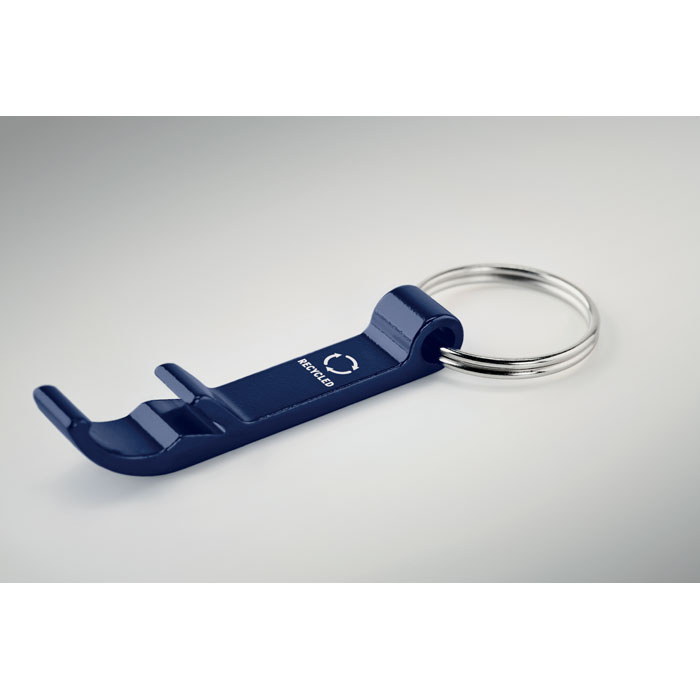
Used for drinking bottles, pens and technical products. Aluminum can be easily reprocessed without losing its properties.
Recycled plastic
Appears in a variety of products such as pens, desk accessories and electronics.
Recycled cotton
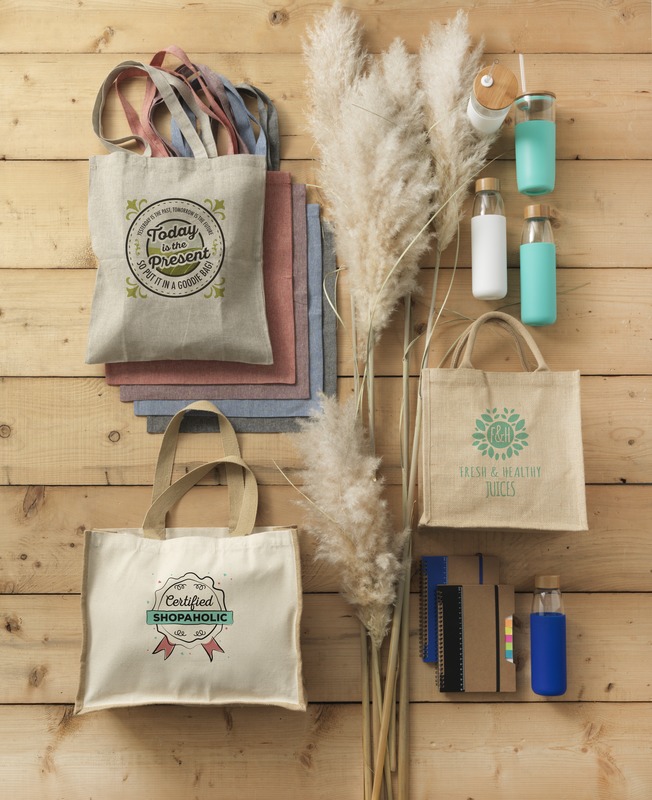
Used in textile products such as shoppers, towels and clothing.
Recycled glass
Used for drinking glasses, decanters and other durable glass products.
How do you know if recycled material is really recycled?
More and more suppliers are using independent certifications.
A well-known example is the RCS (Recycled Claim Standard).
This certification helps to provide insight into which part of a product actually consists of recycled material.
This gives buyers more certainty about the origin of raw materials used.
Why recycled products are often stored longer
People are increasingly consciously choosing products with a story.
A promotional gift made from recycled materials tells something about the organization that gives it.
But ultimately it is not the story that determines sustainability.
The user does that.
A product that is used daily and lasts for years ultimately provides the most value.
Recycled and practical
More and more organizations are combining sustainability with ease of use.
For example:
- recycled drinking bottles;
- notebooks;
- shoppers;
- backpacks;
- pens;
- wireless chargers;
- office supplies.
Precisely because these products are used daily, the sustainable message also remains visible.
Why companies choose this as a promotional gift
Business gifts are increasingly an extension of an organization's identity.
Companies want to show that they pay attention to sustainability without sacrificing quality or appearance.
Recycled materials make it possible to combine both.
That is why they are increasingly used in onboarding packages, Christmas gifts, trade fair packages and employee campaigns.
It's not just the material that counts
When making a sustainable choice, it is wise to look beyond the label.
For example, ask yourself:
- Is this product actually used?
- How long does it last?
- Is the quality good?
- Does it suit the recipient?
If the answer to those questions is positive, the likelihood of long-term use of the product increases. And that is precisely what makes a promotional gift sustainable.
A step towards a circular economy
By reusing materials, fewer new raw materials need to be extracted.
This fits within the idea of a circular economy, in which products and materials remain in circulation for as long as possible.
Recycled materials play an important role in this, provided they are applied in products that last a long time and are actually used.
A sustainable choice with lasting value
More and more organizations are consciously choosing promotional gifts made from recycled materials.
Not because that is sufficient in itself, but because it fits within a broader vision of sustainability, quality and responsible entrepreneurship.
At Tiger Concept we help companies select promotional gifts containing recycled materials are combined with a long service life and practical daily use. It is precisely this combination that ensures the greatest sustainable impact.
Conclusion
Recycled materials are becoming increasingly popular because they help reuse existing raw materials.
Yet sustainability is about more than just the material used. The lifespan, quality and actual use ultimately determine how much value a product delivers.
That is why more and more organizations are opting for promotional gifts that are not only made from recycled materials, but also last for years.
Images

Frequently asked questions
Yes, in many cases. Thanks to modern recycling techniques, recycled materials are often barely inferior to new raw materials. The quality depends on the material and the production process.
Companies are increasingly choosing recycled materials because they save raw materials, reduce waste and contribute to their sustainability goals. In addition, customers and employees appreciate products with a lower environmental impact.
More and more promotional gifts are available in recycled versions, such as drinking bottles, notebooks, bags, pens, umbrellas, power banks and office supplies. Many of these products can be printed with a logo.
Not automatically. Overall sustainability also depends on factors such as lifespan, manufacturing quality, transportation and how often a product is used. A high-quality product made from recycled materials that lasts for years often has the greatest positive impact.